Vinegar: The Only Cleaner You Actually Need
A practical guide to using vinegar around the home — what it cleans, what it kills, what it cannot do, and the exact ratios that actually work.


I have been cleaning with vinegar for years. Not because I read a blog post about it. Not because someone told me it was trendy. Because I opened the cabinet under my kitchen sink one day, looked at the row of brightly coloured bottles with their warning labels and their long lists of ingredients I could not pronounce, and thought: there has to be a better way.
There is. And it costs almost nothing.
This is not a post about going back to basics for the sake of it. It is a practical guide — the kind I wish I had when I started. What vinegar actually does. What it kills and when. What it cannot do. And the exact ratios I use for every room in the house.
What Kind of Vinegar Are We Talking About?
Before anything else, let us be clear about which vinegar belongs in your cleaning cupboard.
White distilled vinegar is what you want for cleaning. It is clear, odourless once dry, and has an acidity level of around 5% — which is the standard for household use. It is inexpensive, widely available, and leaves no residue.
Cleaning vinegar — like the Crystalino range I keep on hand — is formulated at a slightly higher acidity (typically 6%) and often includes essential oils that boost the antimicrobial action and leave a pleasant scent. I use the Crystalino Lavender for the bedroom, living areas, and laundry. The Crystalino Eucalyptus goes in the kitchen and bathroom where I want that sharp, clean feeling. Both come in 1-gallon jugs, which is the only size worth buying if you are going to use vinegar properly. Either works. Cleaning vinegar just works a little harder.
Apple cider vinegar is not for cleaning surfaces. It is darker, stickier, and can leave residue. Save it for your morning tonic.
Does Vinegar Actually Kill Bacteria?
Yes — but with important caveats, and this is where most guides get vague. Let me be specific.
White distilled vinegar at 5% acidity has been shown to kill or significantly reduce:
- E. coli — effective at full strength; less effective when diluted below 1:1
- Salmonella — effective at full strength on hard, non-porous surfaces
- Listeria — effective at full strength with adequate contact time (at least 30 seconds)
- Staphylococcus aureus — effective at full strength
- Mould and mildew spores — effective at full strength; diluted solutions slow regrowth but may not eliminate it
The honest answer about dilution: vinegar's antimicrobial power drops significantly when diluted. For general everyday cleaning — wiping down counters, cleaning glass, deodorising — a 1:1 ratio of vinegar to water is fine. For disinfecting purposes — cutting boards after raw meat, bathroom surfaces, mould — use it undiluted or at a maximum of 2 parts vinegar to 1 part water.
What vinegar does not kill: Vinegar is not effective against all pathogens. It does not reliably kill norovirus, hepatitis A, or C. diff spores. For those, you need a registered disinfectant. Vinegar is a cleaner and a sanitiser — not a hospital-grade disinfectant. Know the difference and use it accordingly.
Contact time matters: Spraying and immediately wiping is not enough for antimicrobial action. Spray, let it sit for at least 30 seconds — ideally a full minute — then wipe. That dwell time is what does the work.
The Ratios I Actually Use
Here is my working guide. These are the ratios I have settled on after years of using vinegar as my primary cleaner.
Everyday Surface Spray
1 part white vinegar : 1 part water
This is my all-purpose spray. I keep a glass bottle of it on the kitchen counter at all times. Countertops, stovetop surrounds, cabinet fronts, the outside of appliances, the dining table. It cleans, deodorises, and leaves no streaks. Add 10 drops of essential oil if you want a scent — I use lavender or eucalyptus.
Glass and Mirrors
1 part white vinegar : 1 part water
The same ratio as the everyday spray, but applied with a microfibre cloth rather than paper towels. Paper towels leave lint. Microfibre leaves nothing. Spray, wipe in circular motions, buff dry. No streaks, no residue, no blue chemical smell.
Bathroom Surfaces — Sink, Taps, Toilet Exterior
Undiluted or 2 parts vinegar : 1 part water
The bathroom needs more than a wipe-down. I use cleaning vinegar undiluted on taps, the sink basin, and the outside of the toilet. Spray, leave for one minute, wipe. For limescale around taps, soak a cloth in undiluted vinegar and wrap it around the fitting for 20–30 minutes. It dissolves without scrubbing.
Toilet Bowl
Undiluted — pour 1 cup directly into the bowl
Pour one cup of undiluted white vinegar into the toilet bowl, let it sit for 30 minutes, scrub with the toilet brush, flush. For stubborn staining, add half a cup of baking soda after the vinegar and let the fizzing action do the work before scrubbing.
Cutting Boards (After Raw Meat or Fish)
Undiluted — spray and leave for 60 seconds minimum
This is not the place for a diluted solution. Spray the board generously with undiluted vinegar, let it sit for a full minute, rinse with hot water. For wooden boards, follow with a light rub of coarse salt and a rinse — the salt acts as a mild abrasive and helps draw out any residue the vinegar loosened.
Kitchen Drain and Sink Deodoriser
Half a cup of baking soda followed by 1 cup of undiluted vinegar
Pour the baking soda down the drain first, then follow with the vinegar. The fizzing reaction breaks up grease and organic matter that causes odours. Leave for 15 minutes, then flush with hot water. I do this once a week and my kitchen drain has never smelled.
Dishwasher Rinse Aid Replacement
Undiluted — fill the rinse aid compartment
White vinegar works as a rinse aid. It prevents water spots on glasses and helps the dishwasher run cleaner. Fill the rinse aid compartment with undiluted white vinegar. It will not damage the machine and it costs a fraction of commercial rinse aid.
Washing Machine Drum Cleaner
2 cups undiluted white vinegar — run an empty hot cycle
Once a month, pour two cups of white vinegar directly into the drum (not the detergent drawer) and run the hottest empty cycle your machine allows. It removes detergent buildup, kills mildew in the drum seal, and eliminates that musty smell that front-loaders are prone to. Follow with a wipe-down of the door seal with undiluted vinegar on a cloth.
Mould on Grout and Tiles
Undiluted — spray, leave 30 minutes, scrub
Spray undiluted vinegar directly onto the mouldy grout or tile. Leave it for at least 30 minutes — longer for heavy mould. Scrub with a stiff brush. Rinse. Repeat if needed. For prevention, spray grout lines with a 1:1 solution weekly after showering and let it air dry without rinsing.
Floors (Tile and Vinyl)
Half a cup of white vinegar per gallon of warm water
This is a light solution — enough to clean and deodorise without leaving residue or making floors slippery. Mop as normal. Do not use vinegar on hardwood floors — the acidity can strip the finish over time.
Produce Wash
1 part white vinegar : 3 parts water
Fill a bowl or your sink with cold water and add white vinegar at a 1:3 ratio. Soak produce for 5–10 minutes, then rinse thoroughly under cold running water. Studies have shown this reduces pesticide residue and surface bacteria more effectively than water alone. I do this for all produce that will be eaten raw — salad leaves, berries, apples, cucumbers.
White Laundry — The Overnight Soak Method
This is the one I am most asked about, and the one I am most proud of.
My family wears white as a base layer. White t-shirts, white socks, white undershirts — the kind of everyday whites that take a beating and need to come out looking genuinely clean, not just washed. And then there are my table cloths, napkins, and kitchen towels. I want those crisp. Bright. The kind of white that makes the table look like you made an effort even when you did not.
This is how I get there.

The night before a heavy laundry day:
Fill a large basin or your laundry sink with warm water. Add a generous scoop of Vanish — I use the powder for whites — and then pour in a good measure of cleaning vinegar. I use roughly 1 cup of Vanish powder to 1 cup of vinegar per large basin of water. The combination works differently than either product alone. The Vanish lifts stains and brightens. The vinegar breaks down mineral deposits, softens fibres, and neutralises odours that detergent alone does not always reach. Together they do something neither does on its own.
Submerge the whites completely. Leave them overnight — at least 8 hours.
In the morning:
-
Clothes and base layers (t-shirts, socks, underwear): transfer directly to the machine and run the heavy duty programme on warm — around 40°C. Do not rinse the soak water out first. Let the machine do that. Add your regular detergent as normal.
-
Table cloths, napkins, and kitchen towels: these get the heavy duty programme on hot — 60°C or higher. These items sit on the table, absorb food, absorb grease, and need a proper thermal clean. The hot cycle combined with the overnight soak is what gets them back to that fresh, crisp white.
Why this works:
Vinegar is acidic. Most staining agents — sweat, food residue, mineral buildup from hard water — are alkaline or mineral-based. The acid in the vinegar breaks them down at a molecular level during the soak, so by the time the machine runs, the stains are already loosened. The Vanish handles the bleaching and brightening. The hot water in the machine finishes the job.
The result is whites that look like they have been professionally laundered. No grey tinge. No yellowing at the collar. No dingy socks. Just clean.
A few things to know:
- Do not add bleach to the soak. Vinegar and bleach together produce chlorine gas. Vanish and vinegar are fine — they are not the same chemistry.
- The vinegar smell disappears completely in the wash. Your laundry will not smell like a chip shop.
- For very stubborn collar or cuff staining, apply undiluted vinegar directly to the stain and let it sit for 30 minutes before adding the item to the soak.
- For the overnight soak I use Vanish Oxi Action — a scoop in a basin of warm water alongside the Crystalino Lavender vinegar. Both are chlorine-bleach-free, so they lift yellowing and set-in stains without weakening the fabric over time. I use the Crystal White for whites and light colours, and the Gold Oxi Action for vibrant and dark fabrics — same method, same vinegar, just the right Vanish for the load.
- I use the Crystalino Lavender for laundry specifically — the lavender essential oil adds a very faint, clean scent to the soak that I find pleasant. It is subtle enough that it does not carry through to the finished laundry, but it makes the soaking process feel less like a chore.
- When I do not have time to soak: I add a scoop of Vanish directly into the drum with the load, pour a cup of cleaning vinegar into the chlorine compartment in my detergent drawer — the small separate pocket next to the main detergent slot — and run the heavy duty cycle as normal. If your machine does not have a chlorine compartment, the fabric softener drawer works just as well. It is not quite the same result as the overnight soak, but it gets the whites noticeably brighter and crisper in a single wash. Good enough for a Tuesday.
- I always add two extra rinse cycles. Whether I have soaked overnight or gone straight to the machine, I run two additional rinses at the end. Vinegar and Vanish both leave residue if the machine only rinses once, and I want the fibres completely clear — nothing sitting in the fabric against skin. The extra rinses are what give the laundry that clean, light finish rather than a heavy, slightly soapy feel.
- For the machine wash itself, I use Molly's Suds Ocean Mist. If anyone in your household has sensitive skin or reacts to fragrance, they also make an unscented version with the exact same formula — just nothing added. And if you are washing baby clothes, they make a baby version formulated specifically for formula, spit-up, and the kind of stains that come with a small person in the house. All three work beautifully with this method.
Is it safe to combine Vanish and vinegar? Here is what I know.
I looked into this properly before making it a regular part of my routine, because I wanted to be sure I was not doing something that would damage my clothes, my machine, or anyone in the house.
The short answer is: yes, it is safe — with one thing worth understanding.
Vanish Oxi Action is a peroxide-based stain remover. Vinegar is acidic. When you mix them together in a basin of water, you will sometimes see a mild fizz. That is the peroxide reacting with the acid — it is the same chemistry as the fizzing you get when you pour vinegar onto baking soda, just much gentler. The reaction is harmless. No toxic fumes, no dangerous byproduct. What it does mean is that a small amount of the active oxygen in the Vanish gets used up in that initial reaction rather than on the stain. In a large basin of water with both products well diluted, the effect is minimal — there is still more than enough active ingredient left to do the job over an 8-hour soak. The results I get confirm that.
For the quick-load machine method, the two products actually never meet at the same time. The Vanish goes into the drum at the start of the wash cycle. The vinegar goes into the chlorine compartment in the detergent drawer — the small separate pocket next to the main detergent slot — and is released during the wash at a different point in the cycle, well after the Vanish has done its work and been flushed through. If your machine does not have a chlorine compartment, the fabric softener drawer works the same way — it holds the vinegar and releases it separately from the main wash. Either way, they are separated by design.
On fabrics: both are safe for cotton, linen, and most synthetics when used at normal concentrations and rinsed out properly. The double rinse I always run is not optional — it is what makes sure neither product is sitting in the fibres against skin. I would not skip it.
On the machine: vinegar in the chlorine compartment is safe for modern washing machines. It is mildly acidic, which is actually beneficial — it prevents mineral and detergent buildup in the drum and the pipes. Many machine manufacturers recommend running a vinegar cycle for maintenance. I have been doing this for years and have had no issues with seals, gaskets, or drum components.
The one thing I would never do is mix vinegar with chlorine bleach — that combination produces chlorine gas and is genuinely dangerous. Vanish Oxi Action is not bleach. It is a peroxide-based product, which is a completely different chemistry. The two are not interchangeable and should not be confused.
What Vinegar Cannot Clean
Being honest about the limits is just as important as knowing the strengths.
Natural stone — marble, granite, travertine, limestone. Vinegar is acidic and will etch the surface over time. Use a pH-neutral cleaner on stone.
Cast iron — the acidity strips the seasoning. Wash cast iron with hot water and a stiff brush only.
Hardwood floors — as mentioned above, the acidity degrades the finish with repeated use.
Egg stains — vinegar causes egg protein to coagulate and set, making the stain worse. Use cold water only on egg.
Bleach — never mix vinegar with bleach. The combination produces chlorine gas. Not dangerous in a brief accidental exposure, but not something to do intentionally.
A Note on Scent
Vinegar smells sharp when wet. It dissipates almost completely as it dries — usually within 10–15 minutes. If the smell bothers you while you are cleaning, open a window. By the time the surface is dry, it is gone.
If you want a scent that lingers, cleaning vinegar with essential oils — eucalyptus, lavender, tea tree — gives you the cleaning power with a more pleasant experience. Tea tree oil also adds its own antimicrobial properties, which is worth knowing.
The Simplest Cleaning Cupboard You Will Ever Have
I keep three things under my sink now. A large bottle of cleaning vinegar — lavender for laundry and general use, eucalyptus for the kitchen and bathroom. A box of baking soda. And a stack of microfibre cloths.
That is it. No colour-coded bottles. No warning labels. No wondering what I am breathing in when I clean the bathroom with the door closed.
Clean does not have to be complicated. And it does not have to smell like a laboratory.
I use Crystalino Lavender and Eucalyptus Essential Oil Cleaning Vinegar for everything in this guide. The Lavender is my go-to for laundry and general surfaces. The Eucalyptus lives in the kitchen and bathroom. Both are available in 1-gallon jugs — linked in the shop below.
Shop This Post
Affiliate links — I only share what I genuinely use and love.
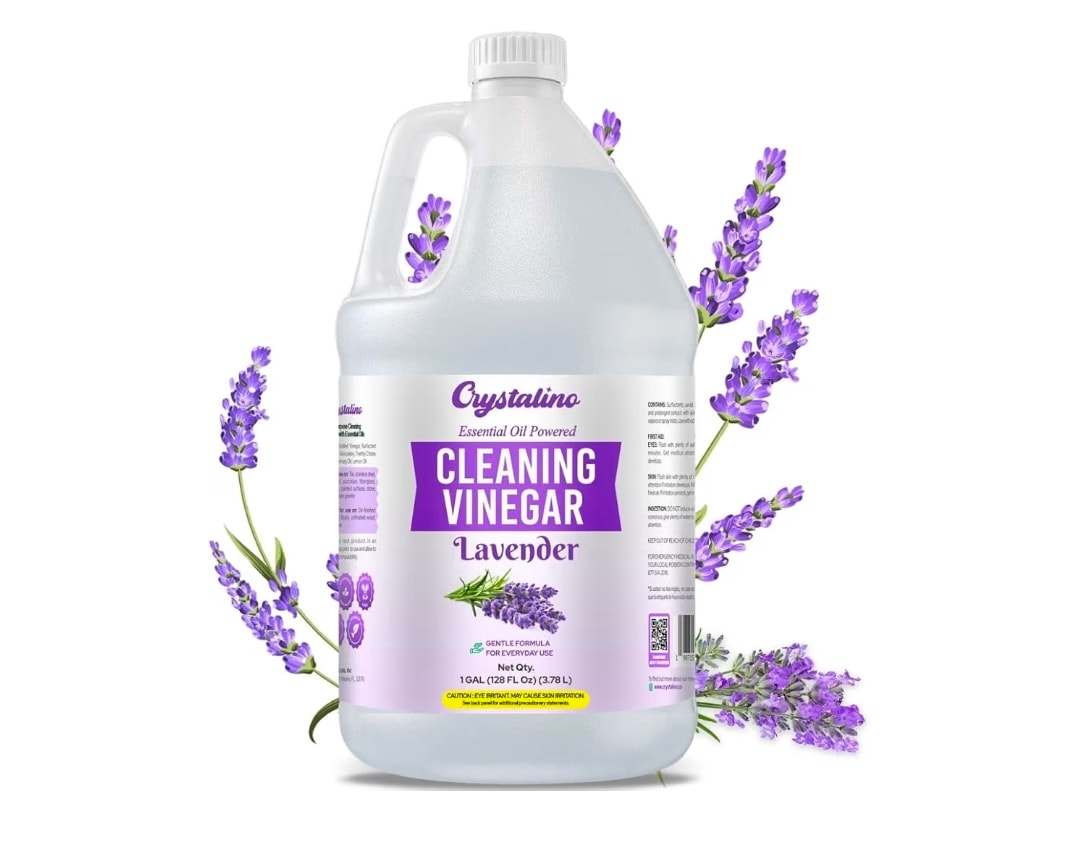
The one I use for laundry soaks, general surfaces, and anywhere I want a clean that smells like something rather than nothing. Essential oil powered, no harsh fumes — 1-gallon jug.
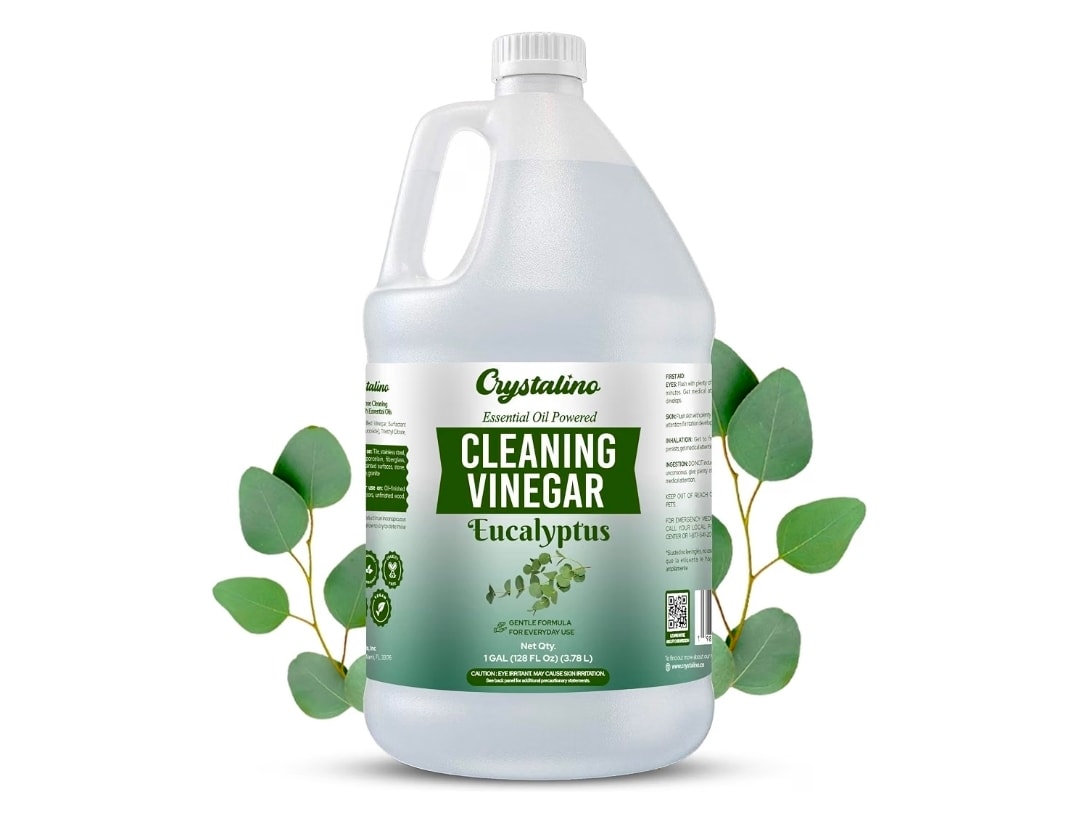
Crisp eucalyptus for the kitchen and bathroom. Same essential oil formula — sharper and more invigorating. Also a 1-gallon jug that lasts.
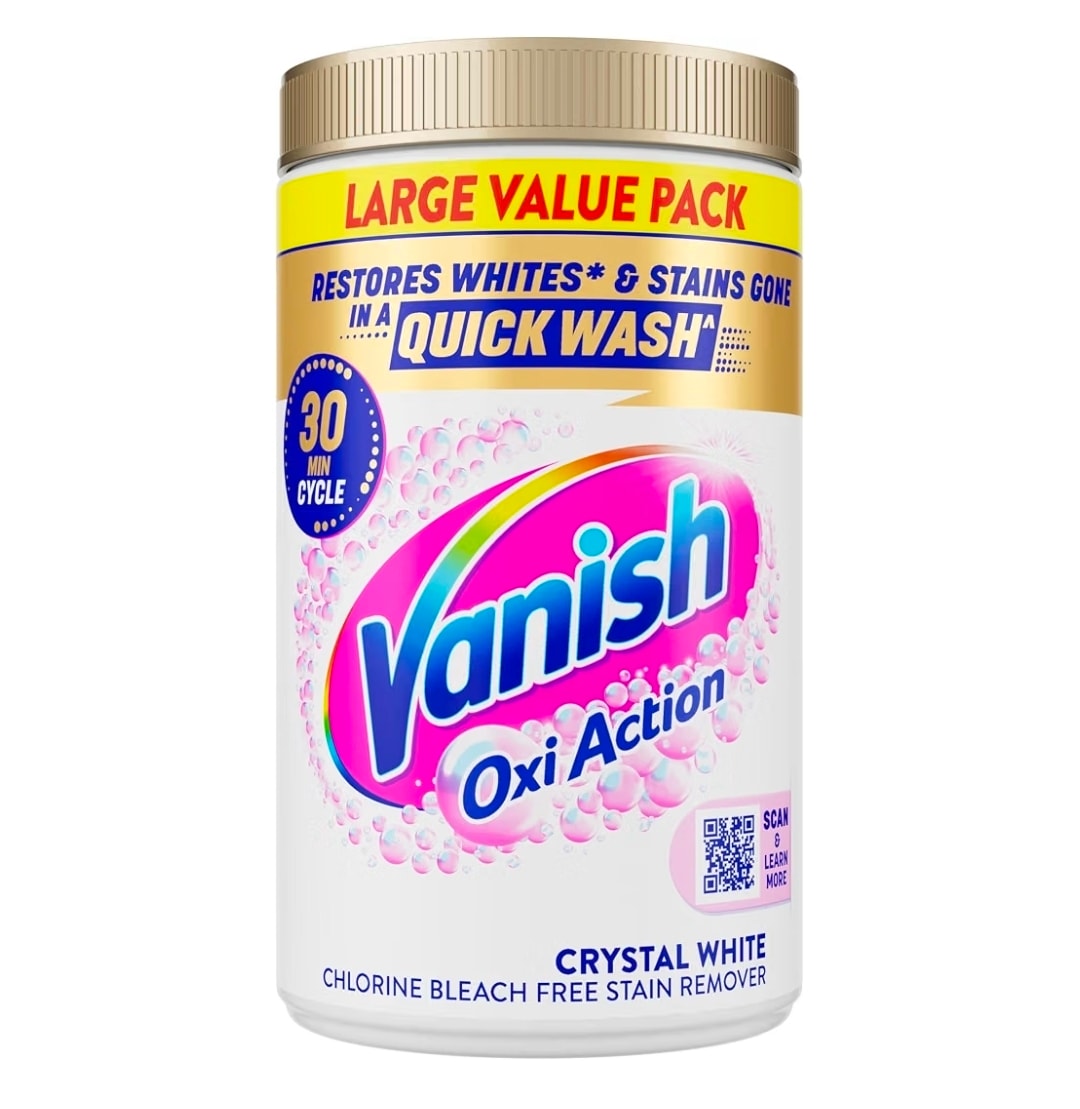
The chlorine-bleach-free stain remover I use in the overnight soak for whites — and straight into the drum when I do not have time to soak. Either way it restores brightness and lifts set-in stains without weakening fabric fibres.
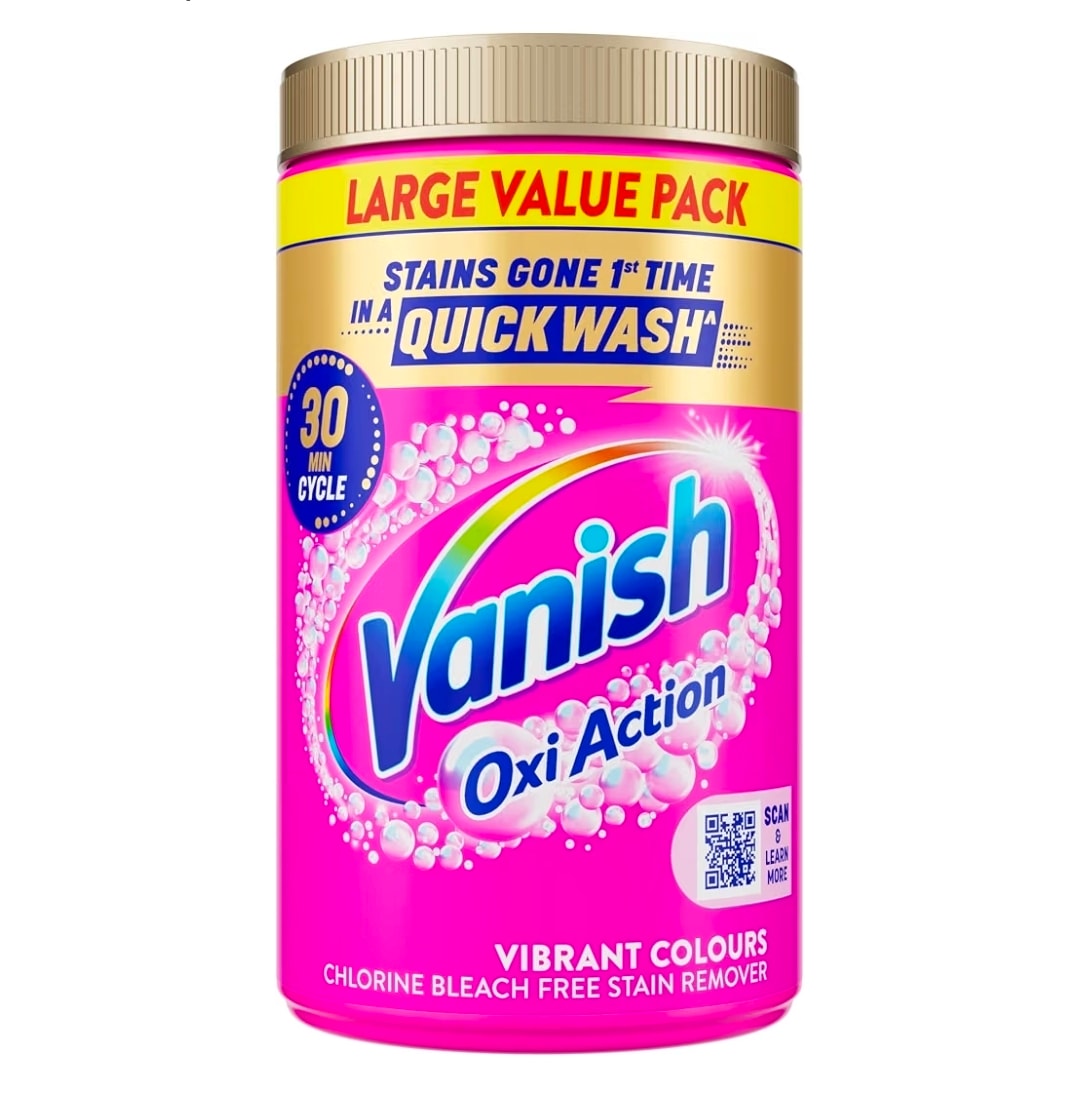
The colour-safe version — same overnight soak method, same vinegar, but safe for vibrant and dark fabrics. Also goes straight into the drum with vinegar in the softener compartment when there is no time to soak.
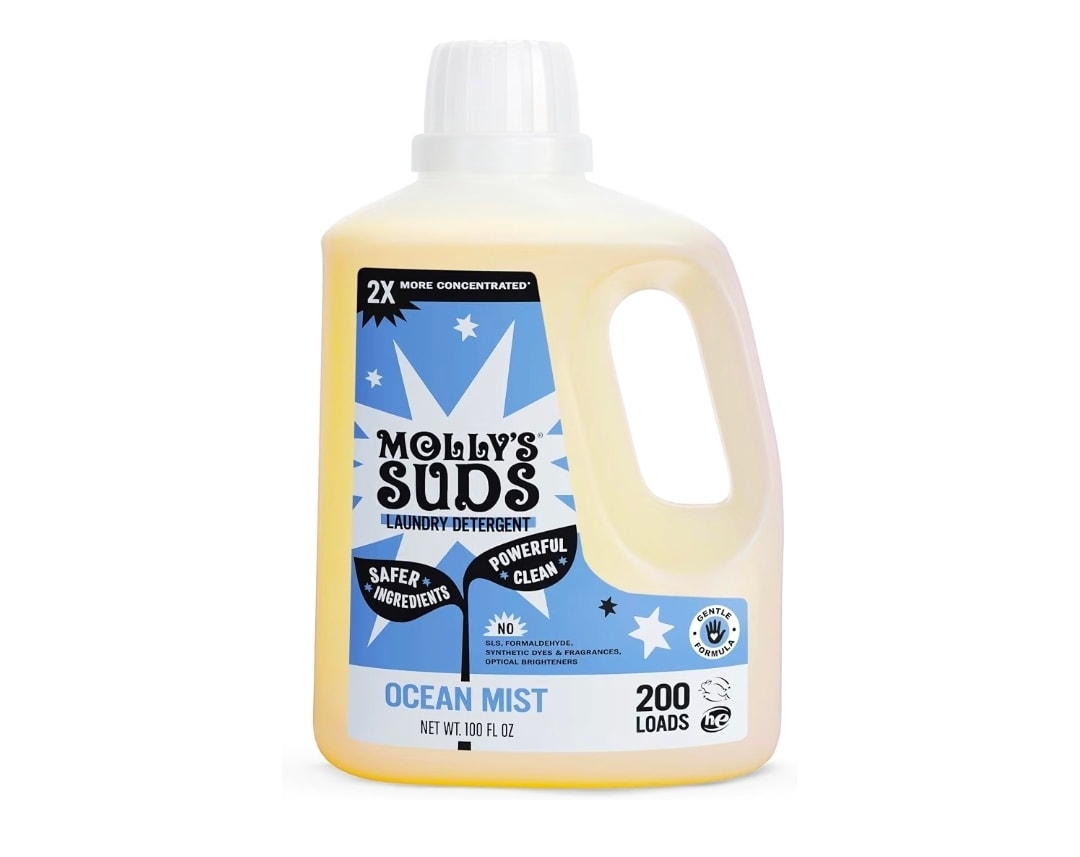
The detergent I use in the heavy duty cycle — after the overnight soak or straight in with Vanish when time is short. I always run two extra rinse cycles to make sure everything clears completely. No synthetic fragrances, no optical brighteners — 200 loads per bottle.
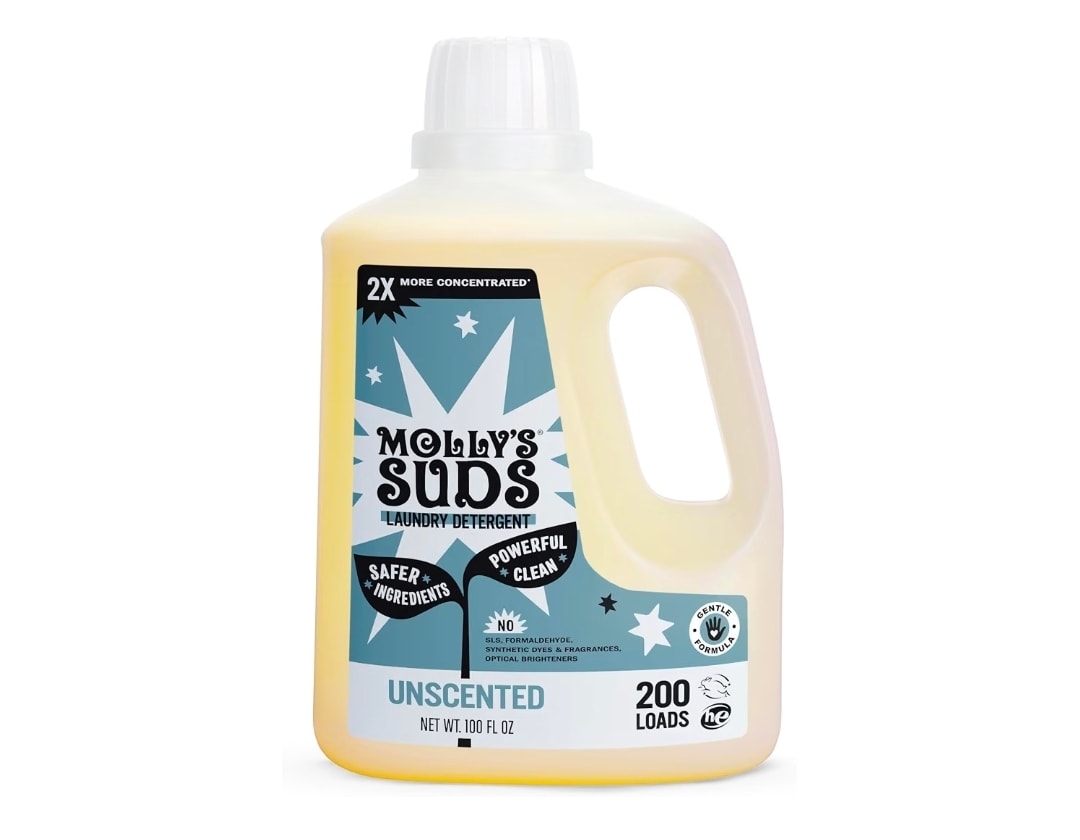
Completely fragrance-free — the same clean formula for anyone with sensitive skin or eczema. No scent, no irritants, same 200 loads.
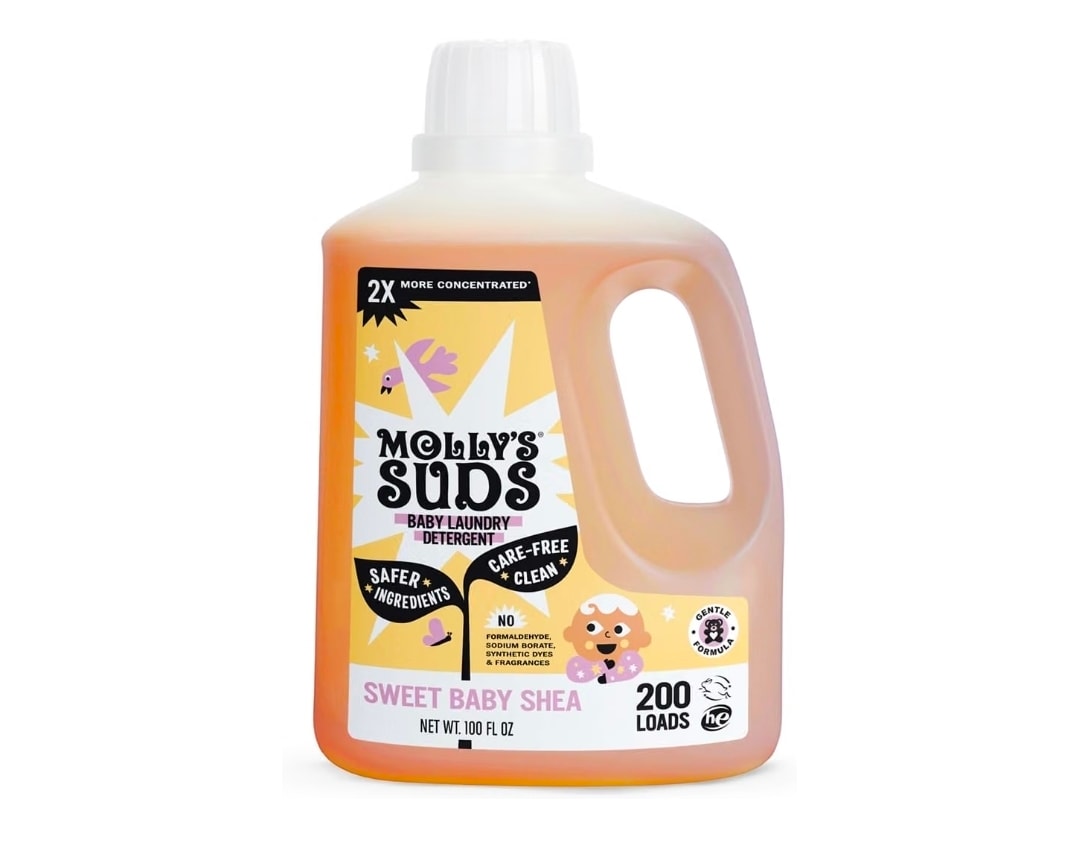
Formulated to remove formula, poop, and spit-up stains. Same clean Molly's Suds formula — gentle enough for newborn skin, 200 loads.