DIY Sourdough Rusks — The Cracker You Never Knew You Were Missing
One baguette, a bread knife, and an oven. That is all it takes to turn a sourdough pain riche into the most satisfying cracker you will ever put on a cheese plate.
This is one of those things I started doing almost by accident and now I cannot imagine not doing it.
You know those long, thin sourdough baguettes — pain riche, the ones with the open crumb and the slightly chewy crust? The ones that are perfect fresh but go a little stale by day two? Do not throw them away. Do not make breadcrumbs. Slice them into rusks instead, and you will have something genuinely better than anything that comes in a packet.
What You Need
Just the one baguette. A sharp bread knife. An oven. That is it.
The bread to use is a sourdough pain riche — the long, thin kind, not a wide country loaf. The narrow shape gives you rounds that are the perfect size for a cracker: small enough to eat in one or two bites, wide enough to hold a proper piece of cheese.
How to Do It
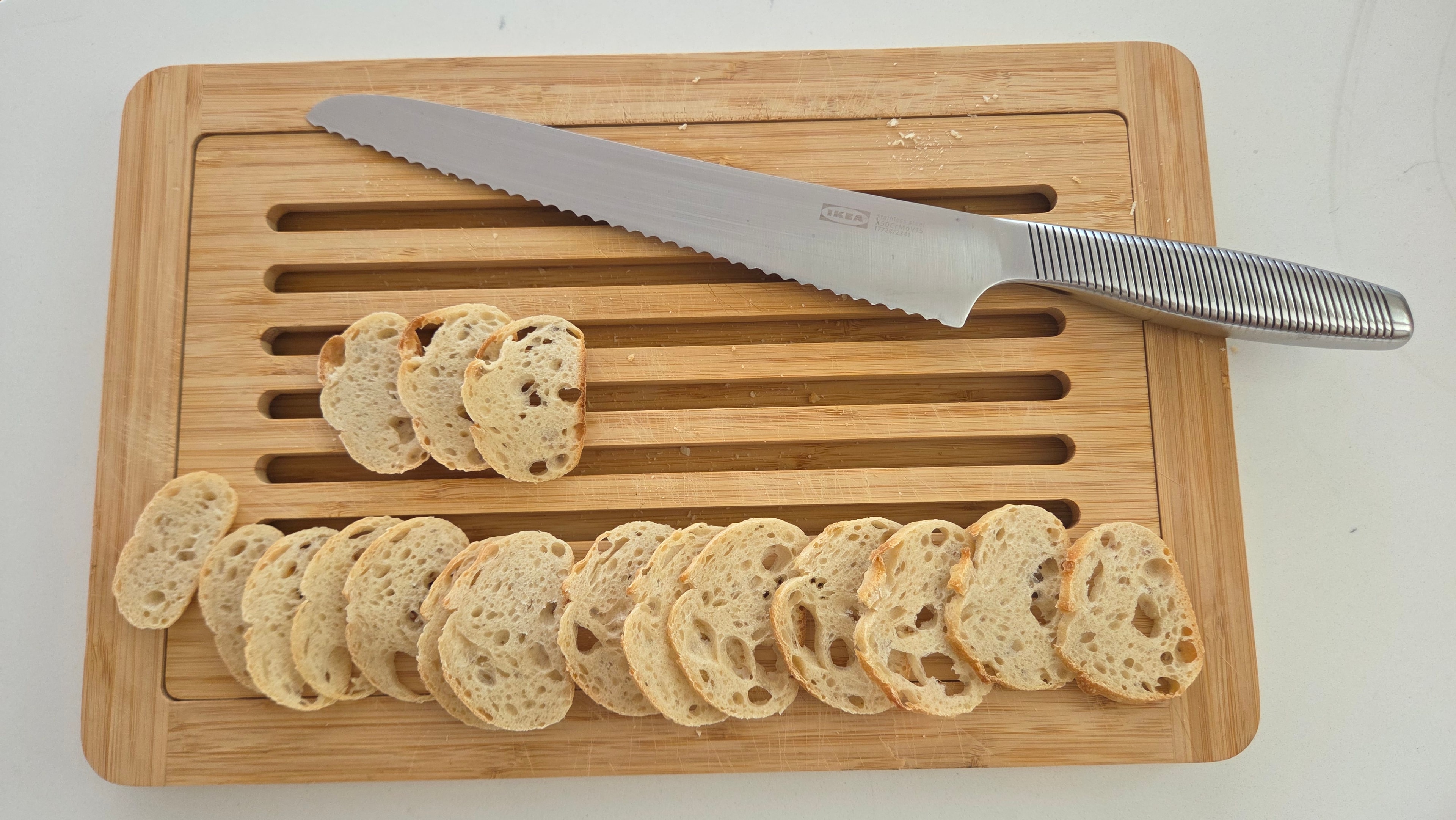
Slice the baguette into rounds about 2mm thick. This is thinner than you think — you want them almost translucent when you hold them up to the light. A sharp serrated bread knife makes this easy. Take your time and keep the slices as even as you can so they dry at the same rate.
Lay them out in a single layer on a clean surface or tray. No oil, no seasoning — just the bread as it is. Cover them loosely with a clean kitchen towel and leave them to dry at room temperature. This is the slow way, and it is the right way. The towel keeps the dust off while still letting the air circulate, and the slices dry out gradually and evenly without any heat.
Leave them for several hours or overnight, turning once if you think of it. They are done when they snap cleanly and feel completely dry all the way through — no give, no softness in the centre.
What to Do With Them
This is where it gets good.
On a cheese plate. This is where they shine. The open crumb of the sourdough holds a slice of aged cheese beautifully, and the mild tang of the bread does not compete with what you put on top. A sliver of Parmesan, a piece of aged Gouda, a smear of soft goat's cheese — all of it works.
With butter. Plain salted butter is perfect. Or make a simple herb butter — softened butter with a little flaky salt and whatever fresh herbs you have: thyme, chives, flat-leaf parsley. Press it into a small dish, chill it, and serve it alongside the rusks. It looks like something from a restaurant and takes about three minutes.
In a salad. On a day when you are keeping carbs low, a handful of these broken into a salad does the job of a crouton without the heaviness. They add crunch and a gentle sourdough flavour without weighing the whole thing down.
As a snack on their own. Honestly, they are good just as they are. A small bowl of rusks with a cup of tea in the afternoon is a very civilised thing.
A Note on the Bread
The quality of the rusk is entirely determined by the quality of the bread. A good sourdough pain riche — properly fermented, with an open crumb and a real crust — will give you a rusk with flavour and character. A supermarket baguette will give you something that tastes like a thin cracker. Both are fine, but if you can get your hands on a proper bakery loaf, it is worth it.
The other thing worth knowing is that slightly stale bread actually slices better than fresh. If your baguette is a day old, the crumb is firmer and the slices hold together more cleanly. Fresh bread can compress a little under the knife. So this is genuinely a good use of bread that is past its best — nothing wasted, something gained.
A note on calories: Each 2mm rusk from a sourdough pain riche weighs roughly 5–6g and comes in at around 14–16 kcal. A serving of 4–5 rusks is approximately 55–80 kcal — which makes them a genuinely light option, especially compared to shop-bought crackers that can run to 50–60 kcal per biscuit.
I keep a small jar of these on the kitchen counter now. They last for weeks in an airtight container, they are ready whenever you need them, and they make even a simple plate of cheese feel like something you put thought into. Which, in a way, you did — it just did not take very long.