Why I Keep Arnicare Gel by My Bed — Living with Chronic Venous Insufficiency
I have chronic venous insufficiency. Most mornings my feet hurt the moment they touch the floor. On the harder days, I reach for Boiron Arnicare Gel to ease the aching, heaviness, and bruise-like discomfort in my feet and lower legs. It does not fix the veins — but it genuinely helps with the symptoms. Here is what I have learned about arnica, varicose veins, and why this gel has earned a permanent place on my nightstand.

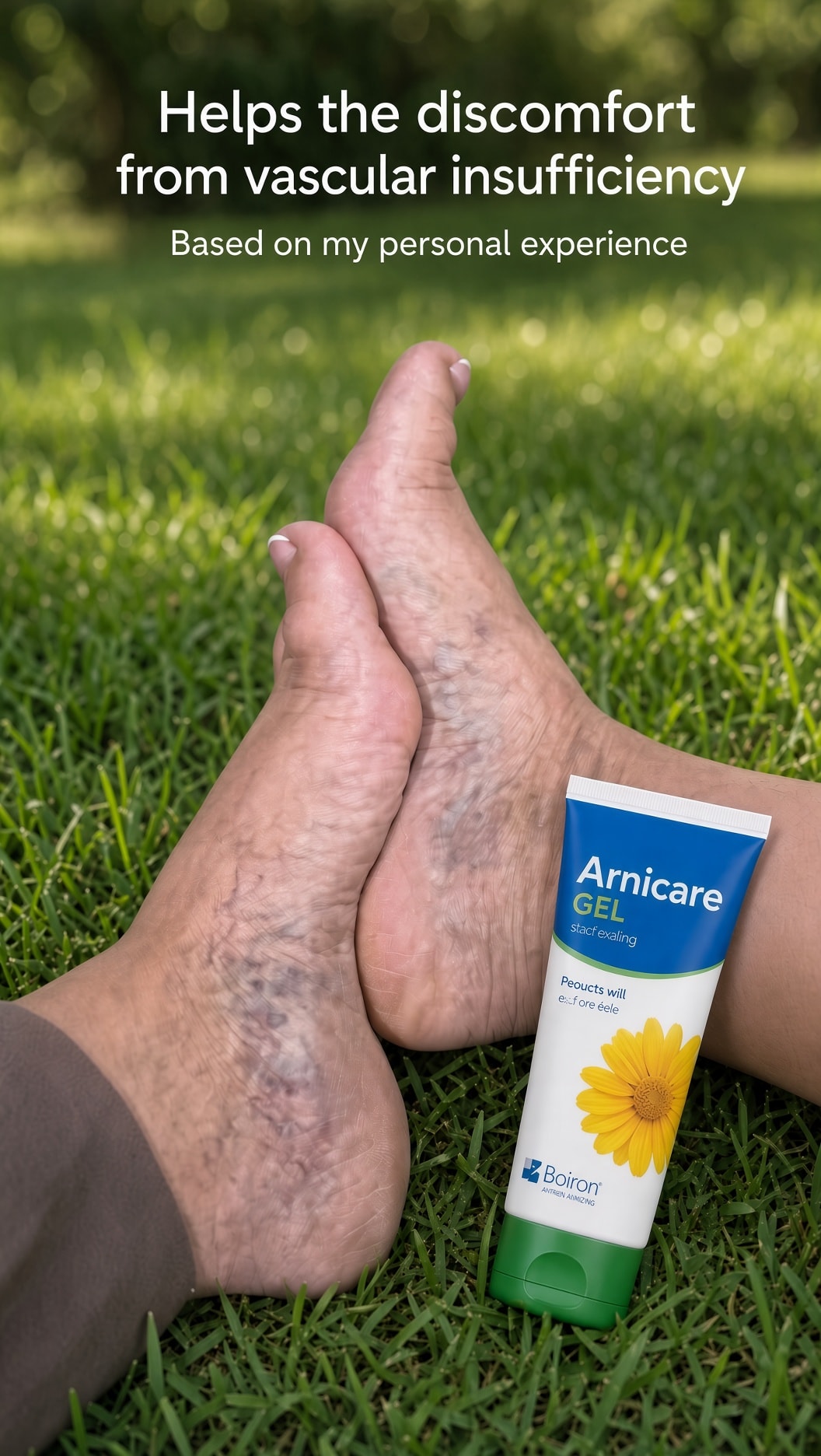
There is a particular kind of pain that is hard to explain to someone who has never felt it.
It is not sharp. It is not dramatic. It is the pain of putting your feet on the floor first thing in the morning and feeling your body protest before the day has even started. Stiffness. Aching. A heaviness in the feet and lower legs that takes a while to ease off — sometimes ten minutes, sometimes longer.
I have chronic venous insufficiency. That is the medical name for what happens when the veins in your legs have trouble pushing blood back up toward the heart. The valves inside the veins weaken over time, blood pools in the lower legs and feet, and the result is exactly what it sounds like: visible veins, discoloration, swelling, and on the harder mornings, real discomfort.
What You Are Actually Looking At
If you have ever noticed blue or purple veins visible through the skin on your feet or lower legs, you may have wondered what they are. Here is a quick guide to the terms, because they are often used interchangeably but mean slightly different things:
Varicose veins — the enlarged, twisted veins that become visible under the skin. They are caused by weakened or damaged vein valves that allow blood to flow backward and pool.
Spider veins — smaller, web-like versions of varicose veins. They sit closer to the surface and often look like a fine network of red, blue, or purple lines.
Chronic venous insufficiency (CVI) — the underlying condition. When the veins consistently struggle to return blood to the heart, that is CVI. Varicose veins are often a symptom of it.
Venous stasis — the pooling of blood that happens as a result of poor venous circulation. It can cause swelling, skin changes, and that heavy, aching feeling.
The darker blotchy areas you sometimes see on the feet and ankles are not always bruises — they are often just the enlarged veins visible beneath the skin, or skin changes caused by long-term pooling of blood.
I have had this for years. It is manageable. But some mornings are harder than others.
Where Arnicare Comes In
On the mornings when the stiffness is worse than usual — when my feet feel particularly heavy and sore before I have even made it to the kitchen — I reach for Boiron Arnicare Gel.
I want to be clear about what it is and what it is not.
Arnicare is not a treatment for chronic venous insufficiency. It does not repair vein valves. It does not improve circulation in any lasting way. Boiron markets it for bruises, muscle pain, and swelling from minor injuries — and that is accurate.
But here is the thing: the discomfort that comes with venous insufficiency often feels like bruising. That deep, sore, bruised-without-being-bruised ache in the feet and lower legs — the heaviness, the stiffness, the feeling that your feet have been through something even before the day has started. And that is exactly what arnica has a long traditional history of addressing.
People with varicose veins and venous insufficiency have used arnica topically for generations to ease the symptoms — the soreness, the swelling, the heavy tired feeling in the legs. Some doctors and herbal practitioners specifically mention arnica gel as an option for this kind of symptomatic relief. It does not fix the underlying vein problem, but it can make the daily discomfort more manageable.
What Arnica Actually Is
Arnica montana is a flowering plant in the daisy family — sometimes called mountain daisy or leopard's bane. It grows in the mountainous regions of Europe and North America, and its flowers have been used medicinally for centuries.
The active compounds in arnica — particularly one called helenalin — have genuine anti-inflammatory properties. When applied topically, arnica can reduce local inflammation, ease soreness, and help bruise-like discoloration fade more quickly.
It is used as:
- Topical gels, creams, and ointments — like Arnicare Gel, which is what I use
- Homeopathic dilutions — highly diluted oral preparations
- Oils and salves — traditional herbal preparations
One important note: only external, topical use is considered safe. Taking arnica internally in non-homeopathic form can be toxic. Stick to the gel.
What the Evidence Actually Says
I looked into this carefully, because I wanted to understand what I was actually doing — not just reach for something because it felt good.
Here is an honest summary:
Where the evidence is reasonably solid: Studies show arnica can reduce bruising after surgery or trauma, and some trials have found it comparable to ibuprofen gel for osteoarthritis pain. The anti-inflammatory mechanism is real.
Where it is more traditional than proven: For venous insufficiency and varicose veins specifically, the support is mostly traditional and anecdotal. Several herbal and wellness sources recommend arnica gel for the heavy, tired, sore feeling in the legs — and some doctors mention it as an option for symptomatic relief — but there is no strong clinical evidence that it meaningfully treats the underlying vein problem.
One small study looked at homeopathic Arnica after varicose vein surgery and found a mild trend toward less pain and smaller bruising compared with placebo. The results were not statistically strong, but they were not nothing either.
The bottom line: Arnicare may give temporary symptomatic relief — less soreness, less of that heavy bruised feeling — but it does not fix the veins. I use it knowing exactly that, and it still earns its place.
How I Use It
I keep the tube on my nightstand. On mornings when I know it is going to be a harder day — when the aching starts before I have even sat up — I apply a small amount to the tops of my feet, my lower ankles, and the soles of my feet — where I have most of my pain — before I get out of bed. I let it absorb for a minute or two, then I get up.
It is not a miracle. But it takes the edge off. The gel absorbs quickly, it is not greasy, it has no strong scent, and it does not irritate my skin. For something I use on already-sensitive, already-compromised skin, that matters.
One rule I follow strictly: never on broken skin. Arnica should only ever go on intact skin. If there are any open areas, cracks, or wounds, I skip it entirely.
A Note on What This Is Not
I want to say this plainly, because I think it matters.
Arnicare is a comfort measure, not a medical treatment. If you have varicose veins, spider veins, or symptoms of chronic venous insufficiency, please talk to your doctor. There are real medical interventions — compression stockings, procedures, lifestyle changes — that can genuinely help. A tube of gel is not a substitute for that conversation.
What it is, for me, is a small thing that makes a hard morning a little easier. And sometimes that is enough.
You can find Boiron Arnicare Gel in the shop — listed under Wellness. As always, I only share things I actually use.
Shop This Post
Affiliate links — I only share what I genuinely use and love.
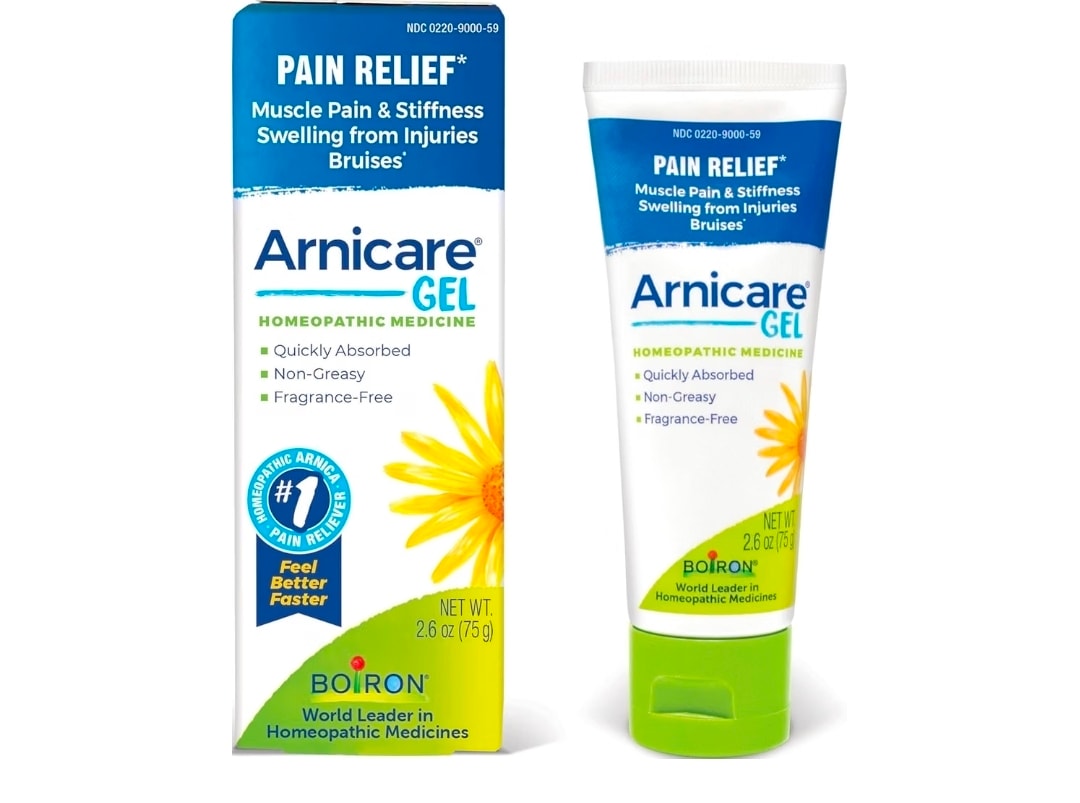
The gel I keep on my nightstand. I use it on my feet and lower legs to ease the aching, heaviness, and bruise-like discomfort of chronic venous insufficiency — fast-absorbing, fragrance-free, and genuinely helpful on harder mornings.