Apple Cider Vinegar: What It Actually Does, and Whether Capsules or Liquid Makes a Difference
I have been using apple cider vinegar for years — sometimes as a pre-food tonic, sometimes in capsule form when life gets busy. Here is what I have learned about what it actually does, how capsules and liquid compare in terms of potency, and why I keep both on hand depending on the day.


There is a bottle of Bragg Apple Cider Vinegar in my pantry that has been there, in one form or another, for a long time. I have been using apple cider vinegar for years — sometimes as a pre-food tonic, sometimes in capsule form when life gets busy.
It started the way most things do — someone mentioned it, this time my mom. An old traditional recipe from the hardworking, hot countryside of southern Europe. It helped to rinse out your body and keep your own odour clean. Think of it as how vinegar takes odour and stains off your clothes when you use it to wash. That will be a separate post. I tried it, and it quietly became part of how I take care of myself. Not a cure. Not a miracle. Just something that, over time, I noticed made a difference for me. Try it for the other reasons below, but make a note if this has an effect on you too. But it is actually for all the other benefits apple cider vinegar has that I use it.
These days I keep both the liquid and the capsules on hand. Which one I reach for depends entirely on what the day looks like.
What Apple Cider Vinegar Actually Is
Apple cider vinegar is made by fermenting crushed apples. The first fermentation converts the natural sugars to alcohol. The second converts that alcohol to acetic acid — the compound that gives ACV its sharp, tangy smell and most of its functional properties.
Raw, unfiltered ACV also contains what is called the mother — a cloudy, strand-like substance made up of proteins, enzymes, and beneficial bacteria that forms naturally during fermentation. It looks a little strange floating in the bottle, but it is exactly what you want. Filtered, pasteurised ACV has had the mother removed, which strips out much of what makes it useful.
When I buy liquid ACV, I always buy raw and unfiltered. The Bragg Organic Raw Apple Cider Vinegar I keep in my pantry has the mother intact, is certified USDA Organic, and non-GMO verified. It is the one I have trusted for years.
What the Research Actually Says
I want to be honest here, because I think a lot of wellness content oversells things. Apple cider vinegar is not a magic solution. But there is genuine, peer-reviewed research behind several of its benefits — and that is more than can be said for a lot of what fills the wellness space.
Blood glucose and insulin response
This is probably the most well-supported area. Multiple studies have found that consuming ACV before or with a carbohydrate-heavy meal can reduce the post-meal blood glucose spike. The acetic acid appears to slow gastric emptying — the rate at which food leaves the stomach — which means glucose enters the bloodstream more gradually. For anyone managing blood sugar, or simply trying to avoid the energy crash that follows a high-carb meal, this is meaningful.
Appetite and satiety
This is the one I notice most personally. When I start my eating window with a tablespoon of liquid ACV in a glass of water, I am genuinely less hungry for longer. I eat less without trying to. The research suggests this is partly the gastric emptying effect again — food moves through the stomach more slowly, so the feeling of fullness lasts longer — and partly an effect on appetite-regulating hormones.
Cholesterol and cardiovascular markers
Some studies have shown modest improvements in LDL cholesterol and triglyceride levels with regular ACV consumption. The evidence here is less consistent than the blood glucose research, but it is not nothing.
Antimicrobial properties
Acetic acid has well-documented antimicrobial properties. This is why vinegar has been used as a preservative for centuries. Whether the concentrations in a daily ACV dose are enough to have a meaningful effect on gut bacteria is still being studied, but the principle is sound.
What it will not do
I want to be clear: apple cider vinegar will not melt fat, cure disease, or replace medical treatment for any condition. Anyone telling you otherwise is selling something. What it can do, used consistently and sensibly, is support a few specific aspects of metabolic health — and that is worth something.
Capsules vs. Liquid: Does It Actually Matter?
This is the question asked myself, and the honest answer is: it depends on what you are trying to achieve.
The case for liquid
Liquid ACV is the original form, and there are a few reasons it may be more effective for certain benefits.
The gastric emptying and appetite effect appears to be partly mechanical — the acidity of the liquid in the stomach triggers a physical response. Capsules dissolve more slowly and the acetic acid is released differently, which may reduce this particular effect.
The mother — the beneficial bacteria and enzymes — is present in raw liquid ACV and largely absent from most capsule formulations. If gut health and the probiotic-adjacent benefits are what you are after, liquid is the better choice.
Absorption begins in the mouth and oesophagus with liquid. With capsules, everything happens further down the digestive tract.
The downside of liquid is obvious: the taste. A tablespoon of straight ACV is sharp and acidic. Always dilute it — I use one tablespoon in a full glass of water, sometimes with a little raw honey — and never drink it undiluted, as the acidity can damage tooth enamel over time. I drink it through a straw and rinse my mouth afterwards.
The case for capsules
Capsules are convenient in a way that liquid simply is not. On a busy morning, when I am not sitting down to a proper start to the day, I am not going to measure out a tablespoon of vinegar and stand at the kitchen counter drinking it. I am going to take three capsules with a glass of water and get on with things.
The Bragg Apple Cider Vinegar Capsules I use contain 1877mg of ACV blend per three-capsule serving, with 750mg of acetic acid. That is a meaningful dose. They are from the same brand I trust for the liquid, which matters to me — I know the sourcing and the standards.
For blood glucose support and general metabolic benefits, capsules are a reasonable alternative to liquid. The convenience factor means you are more likely to actually take them consistently, and consistency matters more than the marginal difference in bioavailability.
What about other brands?
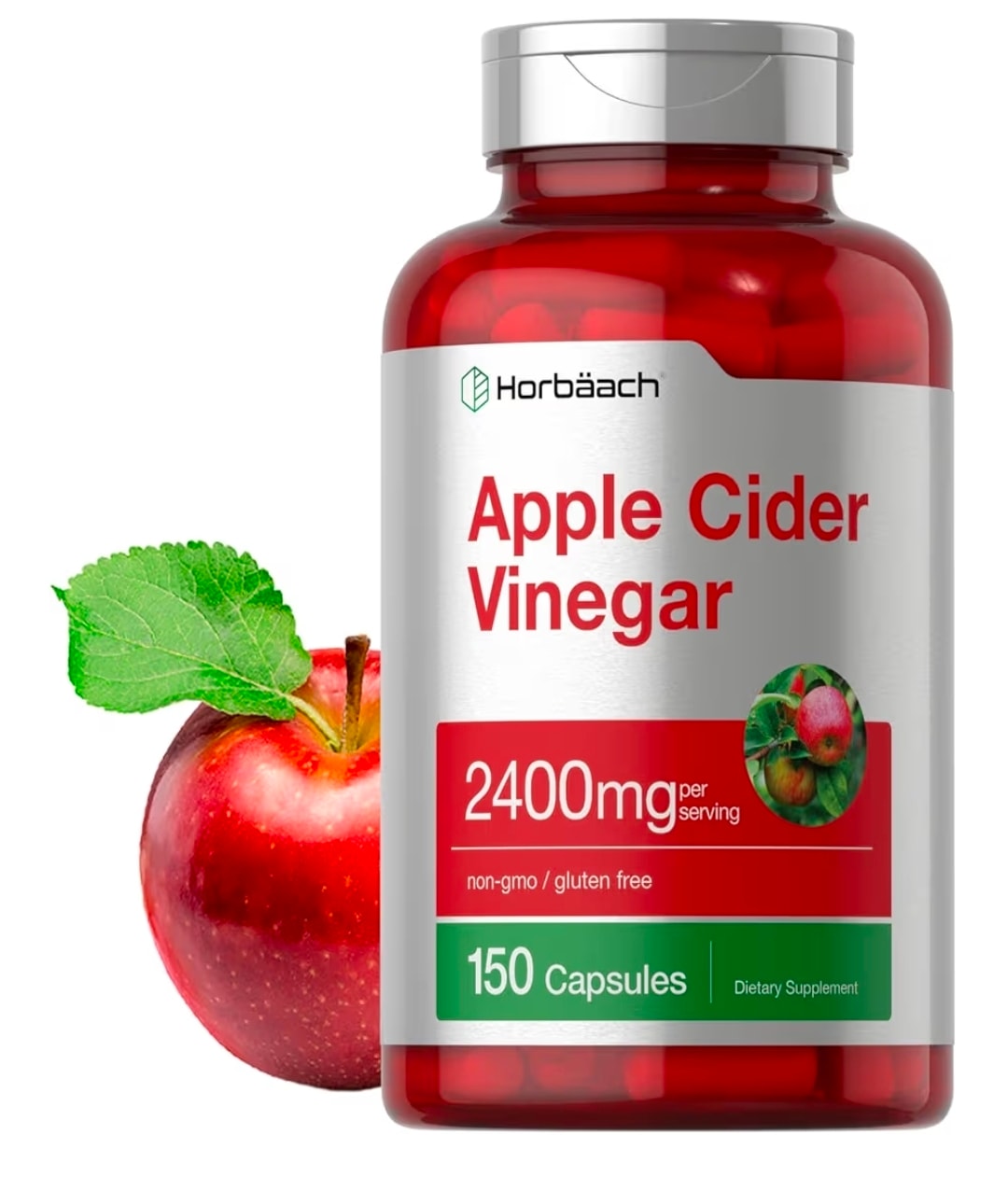
Bragg is not the only option, and if budget is a consideration, Horbaach Apple Cider Vinegar Capsules are worth a serious look. At 2400mg per serving — higher than Bragg's 1877mg blend — and 150 capsules per bottle, they offer more per serving and more per bottle at a lower price point. Non-GMO, gluten free, and made in the USA. They do not contain the mother (few capsule brands do), so if gut health and probiotic-adjacent benefits are your primary goal, liquid is still the better route. But for blood glucose support and appetite management, Horbaach delivers a strong, consistent dose at a price that makes daily use easy to sustain.
How I Actually Use It
By noon, when I have time — I'm starting my eating window intentionally — I make a glass of water with a tablespoon of Bragg liquid ACV. Sometimes I add a small drizzle of raw honey. I drink it before I eat anything.
It keeps my appetite in balance in a way that is hard to fully explain but very easy to notice. I am not ravenous by mid-afternoon. I do not reach for something sweet an hour after breakfast/lunch, my "breakfast"/first meal is my lunch. My eating feels more measured and deliberate, which is exactly what I want when I am being thoughtful about what I put in my body.
On the busier days — when the morning is already moving faster than I would like — I take the capsules. Three with a full glass of water. It is not the same experience as the morning tonic ritual, but it means I am not skipping it entirely.
Both have a place. Neither is a substitute for eating well, sleeping enough, or moving your body. But as a small, consistent addition to a life that is already pointed in the right direction, apple cider vinegar has earned its place in my pantry — and on my shelf.
What I Keep in the Shop
All three of these are in the wellness section of the shop:
- Bragg Organic Raw Apple Cider Vinegar — raw, unfiltered, with the mother. The one I use for my morning tonic.
- Bragg Apple Cider Vinegar Capsules — 1877mg ACV blend per serving. The one I reach for on busy days.
- Horbaach Apple Cider Vinegar Capsules 2400mg — higher potency at 2400mg per serving, 150 capsules per bottle. The budget-friendly alternative I genuinely recommend.
As always, these are affiliate links — I earn a small commission if you purchase through them, at no extra cost to you. I only recommend things I actually use or have thoroughly researched.
Shop This Post
Affiliate links — I only share what I genuinely use and love.