
I Am a Quiet Dopamine Addict — And I Did Not Realize It Until Now
I am a doer. Resilient, solution-seeking, never satisfied with easy. It is mostly a gift. But there is a backside to being wired this way — and it shows up in my body every single night.


I have always been a doer.
Resilient. Solution-seeking. I do not give up until I find a way through. My bosses, my teams, my coworkers, my kids — they all trust me to "handle it" and I like the feeling of fixing things. But if I am being honest, the real driver is internal. It is my own need to grind through challenges. To solve things. To figure it out.
If a task is too easy, I lose interest. If something becomes routine, my brain checks out. I thrive when things are complex, high-demand, and genuinely hard. And when I finally crack something — that feeling of contributing, of being useful, of having pushed through — it is deeply satisfying.
For most of my life, I thought this was just who I am. A personality trait. A strength. And honestly, something I needed — not to feel alive, but to manage life. To keep up with it. To hold everything together.
It is. But it is also something else.
I Am Wired for Dopamine — And It Just Passed Me By
Dopamine is the brain's reward chemical. It is released when you anticipate or achieve something meaningful — solving a problem, finishing a project, figuring out something that stumped you. It is what makes hard work feel good.
And I have been doing it my whole life without really thinking of what it does to my body, me.
The drive to take on complex challenges, the restlessness when things are too simple, the way I cannot let a real problem go until it is solved — that is a dopamine loop. My brain has learned that hard cognitive work leads to reward. So it keeps seeking it. Keeps raising the bar. Keeps needing more stimulation to feel the same satisfaction.
I am not broken. I am not unusual. But I am, quietly, a dopamine addict. And the consequences of that are showing up in my body in ways I am only now starting to pay attention to.
The Part Nobody Talks About
Here is what happens after a long, intense day of thinking.
I am not burning thousands of extra calories. The brain is only about 2% of your body weight, but it uses roughly 20% of your daily energy — almost entirely as glucose. Hard cognitive work increases that demand, but the actual caloric difference is modest. That is not the problem.
The problem is what the brain signals when it has been working hard.
A region in the hypothalamus — the arcuate nucleus — monitors the brain's own glucose supply. When it senses a shortfall, it does not politely suggest you might want a snack. It overrides signals from the rest of your body. It tells you that you are hungry even if you ate two hours ago. And it pushes you toward quick-energy foods: carbohydrates, sugar, something fast and rewarding.
That is why, after a day of solving hard problems, I find myself standing in the kitchen at 10pm reaching for something I do not need.
It Actually Tastes Better After Hard Work
This is the part that surprised me most.
Recent research shows that after cognitively demanding tasks, snacks do not just become more tempting because willpower is depleted — they actually taste better. People rate chips and chocolate as more enjoyable after a hard mental effort. They eat more of them. The brain is compensating for the effort by amplifying the pleasure of food.
It is not weakness. It is not lack of discipline. It is your brain running a reward programme it designed for itself.
Stress Hormones, Late Nights, and the Perfect Storm
Pushing through a tough problem raises cortisol. Cortisol increases appetite — specifically for high-calorie, palatable foods that deliver a fast dopamine hit. It is both a physiological energy request and a psychological comfort response happening at the same time.
Add the late-night element and it compounds. Sleep deprivation raises ghrelin — the hunger hormone. It lowers leptin — the fullness hormone. It even boosts endocannabinoid signalling, which is essentially the same mechanism as the munchies. Your circadian rhythm makes you more prone to wanting energy-dense food when you are awake past your usual bedtime.
And the prefrontal cortex — the part of your brain that says "no, you do not need that" — has been running hard all day. It is tired. The cookie is right there. It becomes the path of least resistance.
The Frustrating Truth
Here is what I have had to sit with, which is a real challenge to chew on, to find the best path forward.
It is either this — the late-night snacking, the cravings, the body doing things I know are not good for it — or I stop doing the thing that makes me feel most alive. The complex work. The hard problems. The deep focus.
And that is not a real option either. Understimulation does its own damage. Restlessness, low mood, a kind of flat emptiness that is its own health problem. I will write about that separately.
So I am not here to tell you I have solved this. I have not. What I am doing is learning to understand it — and finding small ways to recalibrate without dismantling the thing that makes me, me.
What I Do to Come Back to Myself
The wind-down matters more than I used to give it credit for.
When the day has been intense — when I have been deep in something for hours and my nervous system is still running at full speed — I cannot just lie down and expect sleep to come. My brain does not work that way. I have to actively transition.
A hot shower is part of it. Not just for the warmth, but for what it does to the nervous system. The heat signals the body to begin cooling down, which is one of the triggers for sleep. I use a lavender shower steamer — the scent is genuinely calming, not just pleasant. Lavender has real evidence behind it for reducing cortisol and easing the transition from alert to restful. The Beauty by Earth Shower Steamers are the ones I use — they dissolve slowly, the lavender is strong enough to actually do something, and the whole ritual takes maybe ten minutes.
The other thing I have added is the FOREO BEAR 2 facial toning device. I started using it for my skin, but what I noticed first was how much it calmed me down. The microcurrent stimulation has a genuinely settling effect — it is quiet, rhythmic, and requires just enough attention to pull me out of my head and into my body. I use it after the shower, with a serum, and by the time I am done I feel like a different person than the one who was still mentally solving problems twenty minutes earlier.
It is not a cure. But it is a bridge — from the version of me that runs on dopamine and cortisol all day, to the version that can actually rest.
What I Am Still Learning
I am a quiet dopamine addict. I did not know it until I started paying attention to the pattern — the drive, the restlessness, the late-night cravings, the way my body behaves when my brain has been working hard.
Understanding it does not make it disappear. But it changes the relationship I have with it. Instead of fighting myself, I am starting to work with my wiring — to give my brain what it needs to wind down, and to stop treating the cravings as a character flaw.
They are not. They are just the backside of being someone who genuinely loves to think.
The shower steamers and FOREO device I mentioned are both in my shop. And if you are curious about the other side of this — what understimulation does to the body and mind — I will cover that in the next post.
Shop This Post
Affiliate links — I only share what I genuinely use and love.
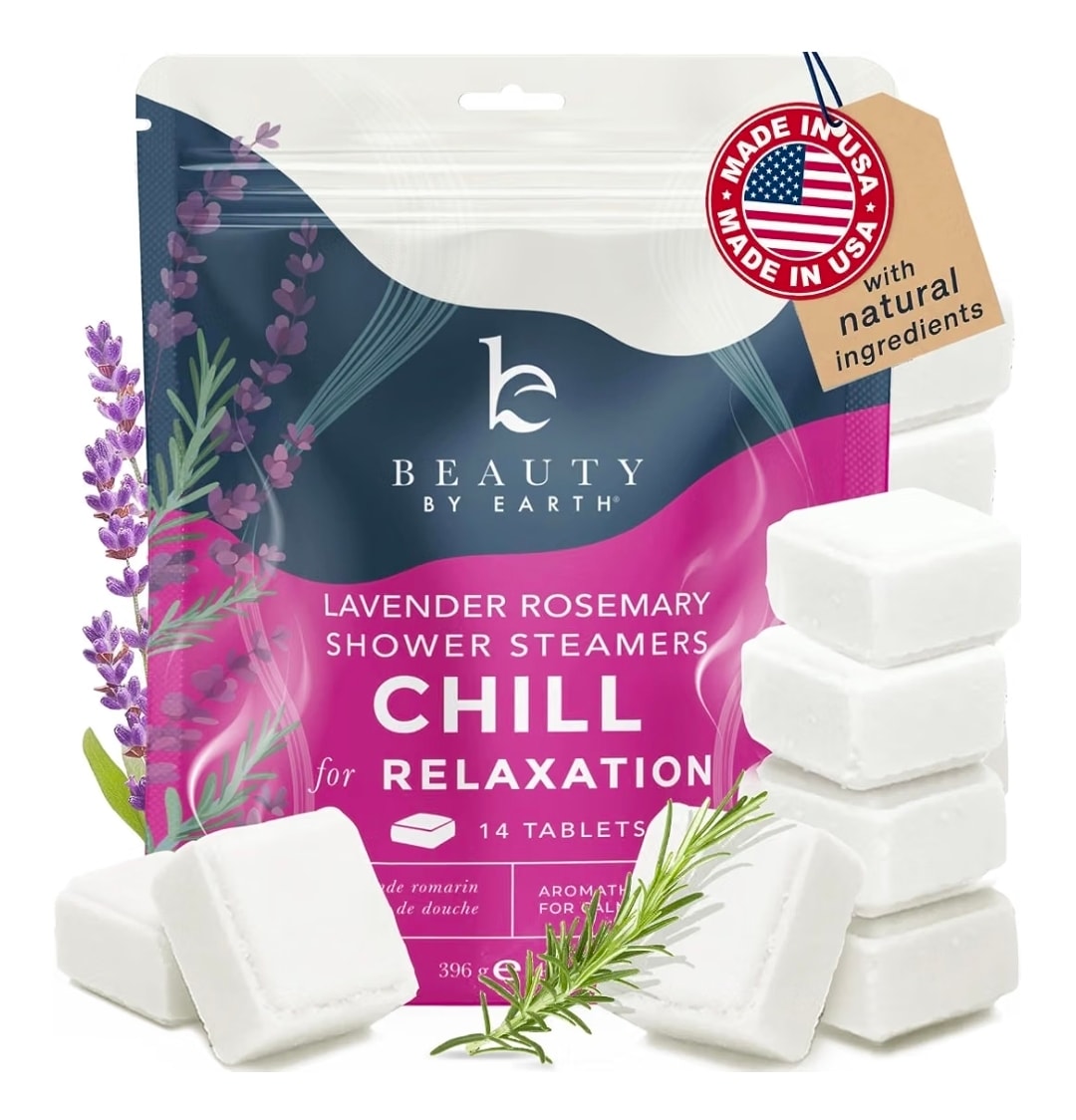
The lavender is strong enough to actually do something. I use these every night after an intense day — ten minutes and my nervous system starts to let go.

I started using it for my skin. What I noticed first was how much it calmed me down. Quiet, rhythmic, and genuinely settling after a long day of hard thinking.


