Soft Layers When Enthesitis Hurts: Heat, Soaks & Showing Up
Post 2 of 3 on living with psoriatic arthritis. Not a cure — a toolkit. The things that help me feel human on the hard days: heat, a proper soak, softness against inflamed skin, and the kind of movement that does not punish you for trying.


Post 2 of 3. Not medical advice. Companion to the recognition post on enthesitis, psoriasis and PsA.
Once you have the word — enthesitis — the question becomes: what helps you feel human while it hurts?
Not cured. Not fixed. Just a little more like yourself on the days when the attachments are angry and the stiffness has settled in before you've even put your feet on the floor.
These don't replace a rheumatologist if you need one. They're the layers that treat you, not the disease. The things you do in between the appointments, the waiting, the coping of the flares that arrive without warning and leave without apology.
This is what I've built around the hard days.
Heat that holds you
Heat is the first thing I reach for when the attachments are angry — together with the Arnicare cream.
Not because it treats the inflammation — it doesn't. But it loosens what has tightened, quiets the ache enough to move, and signals to your nervous system that it is allowed to soften. That matters more than people give it credit for. Warmth increases blood flow to the area, which helps relax the surrounding muscle and connective tissue. When the tendons and ligaments at the attachment points are stiff and guarded, that increased circulation is the difference between being able to move and not.
There's also something worth naming about the nervous system piece specifically. Chronic pain keeps the body in a low-grade threat state — the nervous system learns to brace, to anticipate, to stay alert even when the acute flare has passed. Heat interrupts that pattern. It's one of the few things that can genuinely shift the body out of guarding mode, even briefly. That brief window is where movement becomes possible again. That's why heat comes first — not as a cure, but as a door.
Warm soaks — bath or hot tub if you have one. Not scorching. Warm enough to sink into without flinching. Hot water can aggravate inflamed skin, especially if psoriasis is active. Warm is the right temperature. The heat penetrates deeper than a surface pack and the full-body immersion lets the nervous system exhale in a way that spot treatment can't replicate.
I add Dr Teal's Lavender Epsom Salt — the bag says magnesium sulfate, which is exactly what it is. Around one to two cups in a regular warm bath, ten to twenty minutes. The magnesium absorbs through the skin and supports muscle relaxation — it also plays a role in nerve function and reducing muscle cramping, both of which matter when the body is in a low-grade inflammatory state. It helps with sleep too, which is one of the first things PsA disrupts and one of the hardest to protect.
A few things worth knowing: rinse off after and moisturise. Salt can dry skin, and if you have open cracks or active psoriasis plaques, be careful with it — broken skin and salt is not a comfortable combination. If you're using a hot tub with jets, check your manufacturer's guidance before adding salt to the water. And avoid very hot water on active plaques — it can increase itching and irritation even when the warmth feels good in the moment.
Twenty minutes. No phone. That's the rule.
If a full bath isn't possible, a foot soak in a basin with Epsom salt does a surprising amount of work for heel and sole enthesitis. The feet carry everything. They deserve the attention.
If you have a hot tub with gentle jets, that's a real assist. Warmth plus float equals nervous system exhale. The buoyancy takes the load off the attachments in a way that nothing else quite replicates. Even twenty minutes changes the rest of the evening.
For targeted spots — a stiff lower back, the back of the neck when the stiffness has climbed up from the heels and settled there — I use the inngi Lavender Microwavable Neck Wrap. Two minutes in the microwave and it holds heat for a good while. The weight of it matters as much as the warmth. There's something about gentle pressure on a sore attachment that is genuinely calming — it reduces the guarding reflex that makes the surrounding muscles tighten around a painful spot. Scent, warmth, weight. Three things at once. Always a cloth layer between pack and skin, and never fall asleep with a heat pack directly on skin.
Small sensory kindness
This one sounds small. It isn't.
Inflamed skin — whether it's an active psoriasis patch or just skin that's reactive and thin from a flare — doesn't want friction. Not rough towels, not scratchy waistbands, not anything that drags across the lower back or catches on the ankles where the enthesitis sits. With PsA, skin sensitivity often tracks with joint activity. When the joints are flaring, the skin tends to be more reactive too. They're part of the same immune picture.
I've become deliberate about what touches my skin on the hard days. Soft cotton. Loose fits. Nothing that reminds you the body is already working hard enough. Avoid tight waistbands, tight socks, anything with elastic that sits directly over a sore attachment point. Though I will say — I wear compression stockings, but that is for other reasons entirely, water retention being one of them, not because of the PsA.
One thing worth separating out: loose is the right call when you're resting with your feet up. Elevation does the circulatory work in that position, so nothing needs to be tight. Sometimes comfort is the whole point.
In the shower, the Beauty by Earth Lavender Rosemary Shower Steamers have become part of the ritual. Lavender has well-documented calming effects on the nervous system — it lowers cortisol, which is relevant because stress is one of the most reliable PsA flare triggers. Rosemary supports circulation and has mild anti-inflammatory properties. The steam itself opens the airways and creates a moment of genuine sensory reset when the body has been tense all day. Aroma won't erase enthesitis. It can make the evening survivable. That's enough.
After a soak or a shower, I apply the Arnicare cream while my skin is still slightly warm. It absorbs better and the relief is faster.
Move without punishing the knots
This is the one that requires the most honesty.
On a bad day, the instinct is to stop. To protect the joints by not using them. And sometimes — on a genuine flare day — rest is the right answer. I'm not going to tell you to push through when the body is saying no.
But most days, gentle movement is better than stillness. The attachments that are inflamed don't benefit from being locked in one position. Stiffness compounds. The muscles that support the joints weaken when you stop asking them to work. And then the next day is harder than it needed to be.
What helps — and what to avoid:
Walking. Slow, flat, not long. Enough to keep things moving without loading the heels and soles beyond what they can take that day. Proper supportive shoes — not fashion, not barefoot, not anything that lets the arch collapse. The arch matters more than most people realise until it's already angry. Avoid hard surfaces like concrete when the feet are bad. Grass or a running track is kinder.
Water movement. When the joints are particularly bad, moving in water removes the load entirely. Even walking in a pool changes everything. The buoyancy takes the weight off the entheses and lets you move without the impact. If you have access to a pool, this is worth prioritising on the hard weeks. Avoid cold water — it can cause the muscles to seize and makes the stiffness worse, not better.
Stretching. Not aggressive. Not the kind that pulls at the attachments. Gentle hip flexor stretches, calf lengthening against a wall, slow neck rolls. Range of motion, not performance. The goal is to arrive at tomorrow with a little more ease than today. Avoid deep stretches that load the Achilles or plantar fascia when heel enthesitis is active — they feel like they should help but they often aggravate it.
Restorative Yoga. This one I want to talk about properly, because it's been one of the most genuinely kind things I've done for this body. Not power yoga. Restorative — the kind where you hold supported poses for several minutes, let gravity do the work, and the teacher is not asking you to push to any edge at all. It's a class that works for a stiff body, a body carrying extra weight, a body that has been in pain all week. Nobody is performing. You are just listening.
It increases flexibility slowly and safely. It eases the muscles, the joints, the back, the neck, the shoulders — all the places where PsA and enthesitis tend to accumulate tension. And because there is no pushing, no competition, no expectation, the nervous system actually relaxes. That's the part that matters as much as the physical stretch. A nervous system that is constantly braced against pain doesn't release easily. Restorative yoga is one of the few things that gets through.
I do something before class that some people find odd, but it makes complete sense to me: I take a warm shower before I leave the house. Or if the gym has a sauna, I go in for ten to fifteen minutes before the class starts. The heat loosens the connective tissue and warms the muscles before I ask them to lengthen. The body gets so much more from the stretches when it isn't starting from cold and guarded. It's the same principle as the heat wrap — warm first, then move. The yoga restore class is the movement. The shower or sauna is the preparation that makes it work properly.
Strength work with the right guidance. Building muscle around sore spots — with a physio or trainer who actually understands inflammatory pain — is one of the better long-term investments. Not punishing. Supportive. There's a difference, and it matters. The muscles that surround an inflamed attachment point are doing extra work to compensate and protect. When they're weak, they fatigue faster and the joint takes more of the load. Building them up — slowly, carefully, with someone who knows the difference between productive discomfort and a warning signal — changes the baseline. It doesn't happen quickly. But it compounds. Avoid high-impact work during a flare: running, jumping, heavy loading of inflamed attachments. That's not the time.
The gym hour with your daughter. The ride class after a hard week. The restorative yoga class where you finally exhale. Movement as reclaim, not punishment. That's the version I'm holding onto. The rule I've given myself: do something, not nothing. Even five minutes of slow movement is better than lying still and letting the stiffness win.
Topicals — and the honest version
I use Boiron Arnicare Arthritis Cream for attachment ache when I need a local assist. Arnica has been used for centuries for bruising, muscle soreness, and joint pain — it works by reducing local inflammation and improving circulation to the area. It takes the edge off. It does not treat the disease. The pump version is easier when your hands are stiff — worth having both.
For targeted spots — a stiff lower back, the back of the neck when the stiffness has climbed up from the heels and settled there — it is particularly useful. And if you are like me, living with a complex body that carries issues with the spine and neck for entirely different reasons alongside the PsA, the Arnicare becomes part of a layered approach to several things happening at once. The body does not always keep its problems separate and tidy. You work with what is there.
That's the honest version. Topicals are not a protocol. They're what you reach for at 11pm when a specific spot is making itself known and you need to get to sleep. They work for that. They don't work for the underlying immune activity, and pretending otherwise doesn't help anyone.
What to avoid: strong-scented topicals on active psoriasis plaques — fragrance can irritate already-compromised skin. Avoid anything with menthol or camphor on broken or cracked skin. And avoid the temptation to apply more than directed — with topicals, more is not more.
Treatments take time — if they work. Same truth as my scalp. Comfort layers are not a replacement for the bigger conversation. They're what you do while that conversation is happening in the background.
When layers aren't enough
Persistent multi-site enthesitis with psoriasis is a rheumatology conversation. Not a lifestyle conversation. Not a supplement conversation. Rheumatology.
NSAIDs if they're safe for you — they reduce both pain and inflammation, which is different from what a topical does. Disease-modifying options when lifestyle and comfort care can't carry it alone. Asking for that help is not giving up — it's the right next step, and it's one that took me longer than it should have to take seriously.
The immune system is not waiting for you to manage better before it decides to settle. That's the honest part that doesn't get said enough. You can do everything right and still flare. The disease is not a reflection of how hard you're trying.
Asking for help is strength. Full stop.
The evening wind-down
When the day has been hard, I end it deliberately.
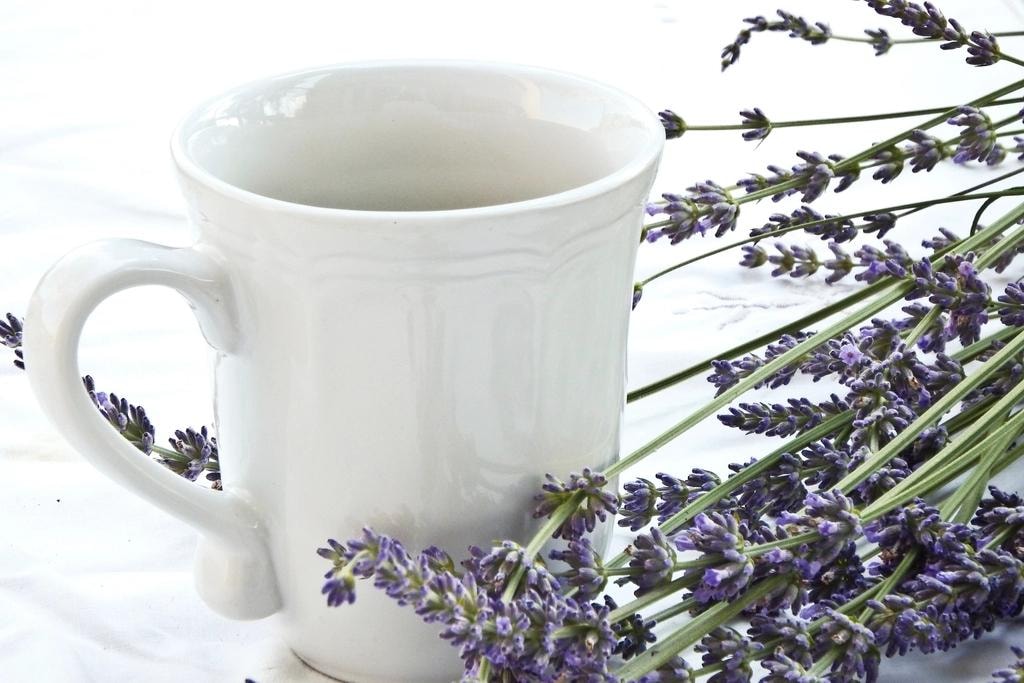
A cup of Clipper Organic Chamomile & Lavender Tea — caffeine-free, warm, something to hold. Chamomile has mild anti-inflammatory and muscle-relaxing properties, and it supports the transition into sleep by calming the nervous system. The lavender continues what the shower started — it's not coincidence that both appear in the same evening ritual. Scent memory is real. The body starts to wind down when it recognises the cues.
Heat wrap on. Arnicare on the spots that need it. Lights low.
Sleep is when the body does its repair work — tissue regeneration, immune regulation, cortisol reset. PsA makes sleep harder: pain wakes you, stiffness wakes you, the immune system doesn't clock off at midnight. Protecting the conditions for sleep is part of managing the disease, not a luxury on top of it. Avoid screens in the hour before bed — the blue light suppresses melatonin and keeps the nervous system alert when it needs to be winding down. Avoid caffeine after 2pm if sleep is already fragile.
The evening wind-down is not indulgence. It's maintenance.
Comfort layers are not weakness. They're how you stay in the game long enough for the bigger work to matter.
Next: fuel — sun as natural vitamin D, northern winters, B12 when pain tanks your energy, and omega-3.
From the shop
This post contains Amazon affiliate links. As an Amazon Associate I earn from qualifying purchases at no extra cost to you. Comfort tools — not prescriptions.
- inngi Lavender Microwavable Neck Wrap Set — heat, weight, and lavender for targeted attachment relief
- Dr Teal's Lavender Epsom Salt — magnesium soak for muscle relaxation, nerve support, and sleep
- Boiron Arnicare Arthritis Cream — topical arnica for localised joint and muscle ache
- Boiron Arnicare Arthritis Cream Pump — easier to use when hands are stiff
- Beauty by Earth Lavender Rosemary Shower Steamers — cortisol-lowering aromatherapy for reactive skin and the nervous system
- Clipper Organic Chamomile & Lavender Tea — anti-inflammatory, muscle-relaxing, caffeine-free evening wind-down